What a Retaining Wall Actually Does for Your Yard (Beyond Holding Back Dirt)
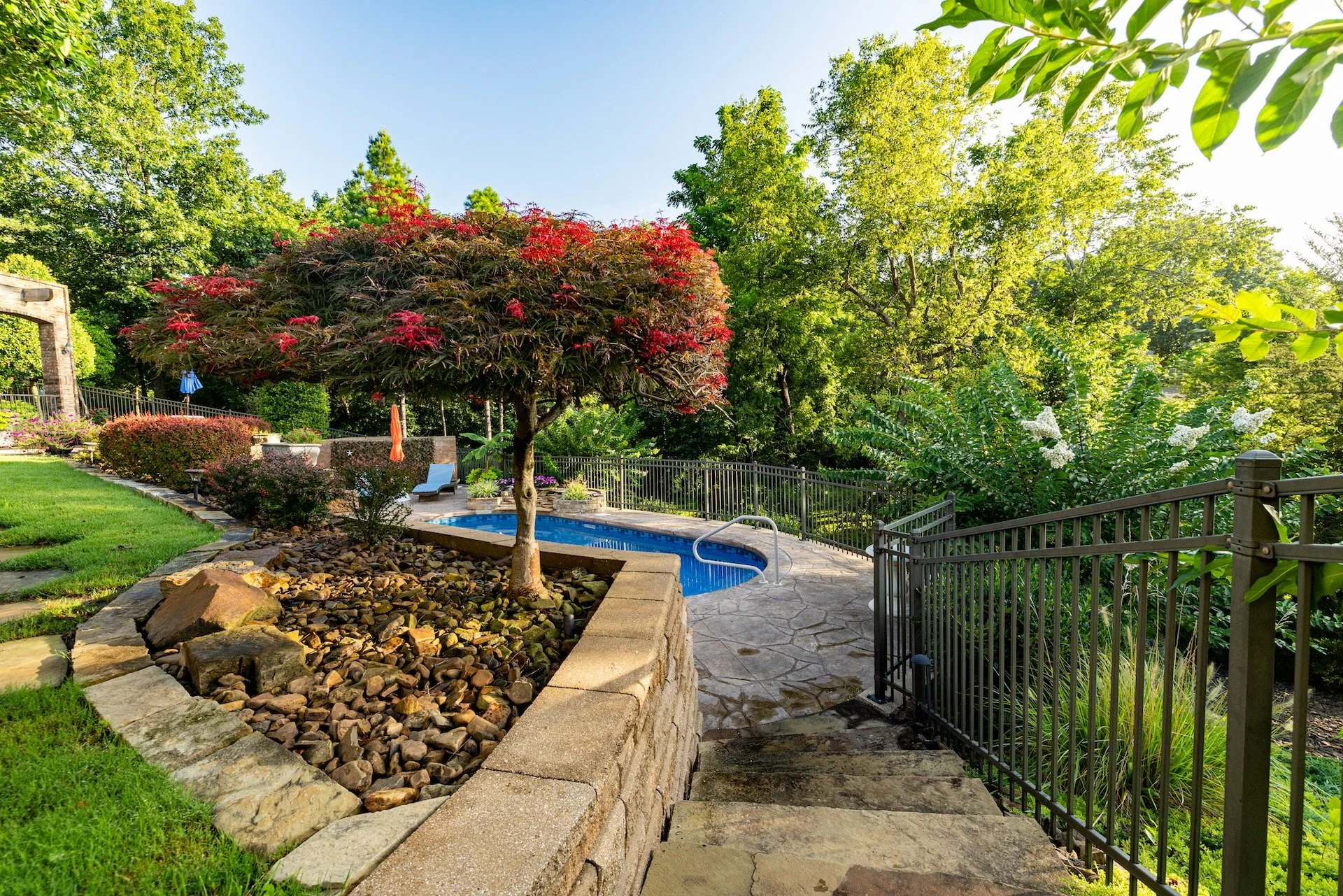
A retaining wall rarely gets the same attention as a patio or an outdoor kitchen. It is not the feature people photograph first or the one that starts the conversation at a backyard gathering. But ask any landscape designer which element does the most structural and visual work on a sloped property, and the answer is almost always the same.
The wall is doing everything.
Related: Why You Need a Retaining Wall in Johnson or Springdale, AR, (And How We Build Them)
The Structural Job
At its most basic, a retaining wall holds soil in place. It resists the lateral pressure of the earth on a slope and prevents it from moving downhill. Without one, sloped properties in Northwest Arkansas lose ground slowly and sometimes not so slowly. Rain washes topsoil out of beds. Grades shift toward the foundation. Patios settle unevenly because the soil beneath them was never stabilized.
The Ozark region adds its own complications. Clay-heavy soils expand when wet and contract when dry. Seasonal rain events are intense. Freeze-thaw cycles stress any structure that was not built with proper drainage behind it. A retaining wall designed for these conditions includes a compacted base, backfill that drains freely, and a system for routing water away from the wall face so hydrostatic pressure does not build and push the wall forward over time.
When the engineering is right, the wall does its job invisibly. That is the point. You should not be thinking about your retaining wall. You should be enjoying the level patio or the terraced garden beds it made possible.
Related: How Thoughtful Landscape Design Turns Backyards Into Relaxing Family Retreats in Centerton, AR
The Design Job
This is where a retaining wall starts earning more than its structural keep. A well-placed wall transforms a sloped yard from a liability into an asset.
It creates level areas where none existed. A terrace for dining. A flat pad for a fire pit. A raised planting bed that brings color and texture to eye level instead of leaving it at your feet. On properties with significant grade changes, a series of shorter walls with planting between them looks far more refined than a single tall wall, and it performs better structurally too.
Material choice matters here as much as placement. Natural stone gives a wall organic texture that blends into the landscape. Segmental block offers clean lines and uniform color for a more contemporary look. The right material depends on the architecture of the home and how the wall relates to surrounding features like walkways, patios, and lighting.
A retaining wall also creates implied boundaries. It separates the lawn from the patio. It defines the edge of a garden. It gives the landscape a sense of intention that flat, uninterrupted yards rarely achieve.
What Most People Miss
The biggest mistake homeowners make with retaining walls is treating them as afterthoughts. The wall goes in to fix a drainage problem or stop a slope from creeping into the yard, and nobody thinks about how it could also improve the space.
A retaining wall planned alongside the rest of the landscape becomes part of the design. It works with the patio, the plantings, the lighting, and the grade to create something cohesive. A wall added later to solve a problem usually looks like exactly that.
We design and build retaining walls in Rogers, Arkansas, and throughout Northwest Arkansas. If your property has a slope, a drainage concern, or just a yard that is not as usable as it should be, let us take a look.